
It’s Not Personal
This piece brings together thoughts I’ve been carrying for the past year. Writing it down was more cathartic than I expected and helped me understand patterns I struggled to name early in my professional development.
TL;DR
The hardest part of my job wasn’t technical. It was how I reacted under uncertainty.
I grew up in environments where reputation mattered more than long-term value, so reacting quickly felt like safety.
Those instincts don’t age well in collaborative work. They turn certainty into defensiveness and hesitation into self-doubt.
In rooms full of capable people, soft skills are really about how you interpret ambiguity.
Processing before responding isn’t about slowing down. It’s about being strategic.
Good work cultures make it safe to surface problems because that’s how systems improve.
Real leverage comes from pausing just long enough to choose the right move, then committing fully.
Where This All started
It took me some time to realize that the hardest part of my job wasn’t technical.
I learned how to code. I picked up frameworks. I could ship work. But I kept running into friction when things felt unclear, when feedback landed awkwardly, or when something went wrong and I wasn’t sure how exposed I was. The issue wasn’t competence. It was how quickly my mind rushed to fill in the gaps.
That reaction didn’t come from nowhere.
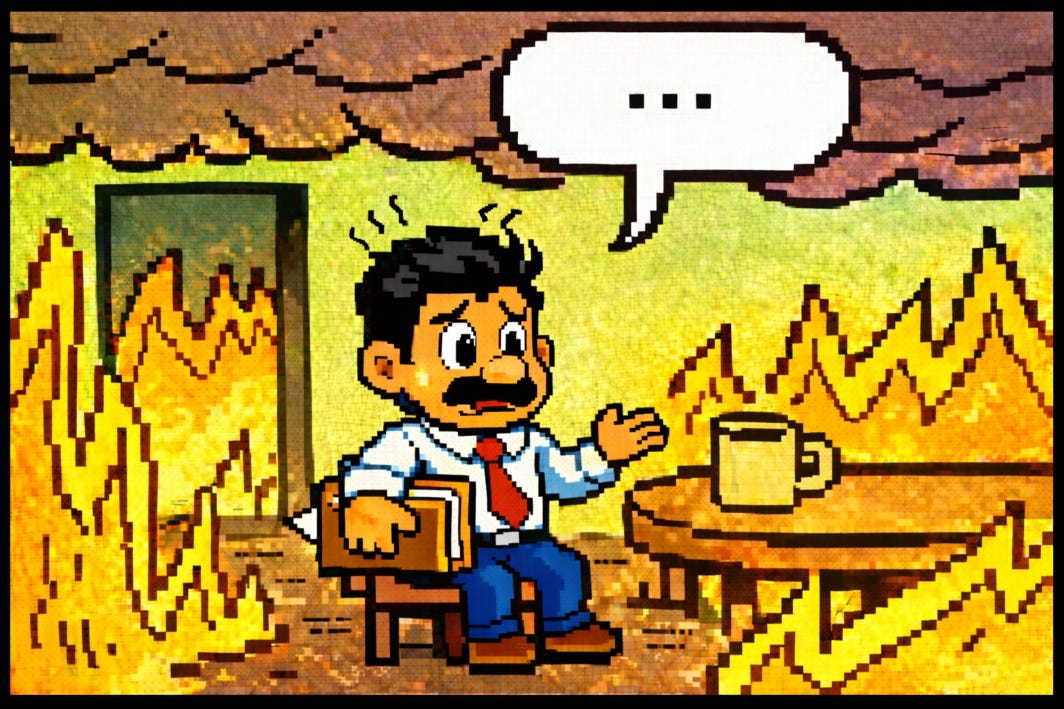
I grew up in environments where reputation mattered more than actual value or long-term impact. In school, and later in early work settings, how you showed up socially carried weight. Certainty was rewarded. Hesitation had a cost. Reacting quickly felt safer than pausing to think things through.
Those rules made sense at the time. They reduced risk. They helped you avoid being questioned, second-guessed, or silently written off, like the pause in class or the meeting where someone else filled the silence first.
The problem is that those same instincts don’t age well.
In modern work environments, especially collaborative ones, pausing isn’t weakness. Clarifying isn’t incompetence. And reacting quickly can create more problems than it solves. But when you’ve been trained to treat uncertainty as a threat, your body doesn’t wait for context. It reacts.
When something feels off, I’ve learned to recognize the pattern. The reaction shows up first, before I’ve had a chance to think it through. A familiar thought flashes through my head: What is this going to cost me?
Nothing concrete has changed, but I can feel my imagination starting to run ahead of reality.
That reflex kept me safe early on. At the time, saving face felt like part of the process.
It just stopped being useful once the work required trust, collaboration, and strategy instead of defense.
Skills Aren’t the Differentiator You Think They Are
Skills matter. Competence gets you in the room. It gives you credibility. But at a certain point, especially in high-performing environments, everyone in the room is skilled. Or skilled enough.
From there, the difference stops being technical and starts being behavioral.
Tone. Timing. Assumptions. How you handle ambiguity. How you respond when something feels unclear. These aren’t secondary concerns. They are signals. And they are shaped less by training than by how your nervous system learned to manage risk.
That’s when it became clear the issue wasn’t ability.
It was translation.
How High-Stakes Rules Quietly Misfire
The rules I learned early didn’t disappear.
They just changed shape.
Then, the math was simple:
A good reputation meant safety
Certainty signaled strength
Hesitation looked like weakness
Reaction was a form of survival
Now, those same instincts show up differently:
Reputation turns into identity
Certainty turns into defensiveness
Hesitation feels like self-betrayal
Reaction shows up quietly
Not as confrontation, but as habits.
I would read tone as threat.
I would fill silence with meaning.
I would ask questions that sounded like curiosity but were really requests for reassurance.
Nothing explodes. Nothing is obviously wrong. But conversations feel heavier than they need to be, and alignment takes longer than it should.
This is where soft skills actually live.
Not in being agreeable.
Not in being polished.
But in how you interpret ambiguity.
When Reacting Got in the Way of Understanding
I felt this most clearly once I landed in a startup.
I had spent years focused on skills, learning to code, picking up frameworks, trying to figure out what would finally be enough to call myself a software engineer. I treated competence like a threshold. If I could just clear it, everything else would fall into place. I wasn’t thinking much about soft skills because I didn’t think they were the hard part.
The work itself wasn’t the problem. I could do the job. The challenge was everything around it. Incomplete information. Evolving requirements. Problems without clean answers.
Then something went wrong.
Not in a dramatic way. Not a catastrophe. Just the kind of issue that shows up in startups when you’re moving quickly, iterating in real time, and building systems that haven’t had the benefit of years of hardening yet.
That’s the reality of early-stage work. You’re rarely shipping something that’s perfect on the first pass. You’re learning as you go. Assumptions get tested. Edges you didn’t see at first start to show. Iteration isn’t a failure. It’s the job.
The feedback that followed wasn’t personal. It was system level. The concern wasn’t why it happened. It was what it affected. When data touches production systems, it impacts real people. It creates financial risk. It can introduce safety issues. That’s why processes exist.
Underneath it all were questions about process and responsibility, not fault.
But that wasn’t where my attention went at first.
Exposure was louder than understanding. My instinct shifted toward damage control instead of clarity. The reaction stayed internal, but it was immediate.
Once I slowed down enough to process it, the ask became obvious. The system needed to be resilient to mistakes, not dependent on perfection.
Reacting kept the spotlight on me.
Responding shifted it to the work.
That’s the reality of early-stage work. You’re rarely shipping something that’s perfect on the first pass. You’re learning as you go. Assumptions get tested. Edges you didn’t see at first start to show. Iteration isn’t a failure. It’s the job.
Processing vs. Responding
What helped me understand that difference more deeply was therapy.
Not as a quick fix, but as a way to recognize patterns I’d been running for years. It helped me understand my behavioral health and how my nervous system learned to stay alert, decisive, and ready to act because, for a long time, I felt like it was necessary.
When you grow up in environments where decisions carry real consequences, money decisions, survival decisions, you don’t always have the luxury of slowing down. Planning feels like a privilege. Hesitation feels dangerous.
That wiring doesn’t disappear just because circumstances change.
Reacting is immediate. It’s driven by discomfort and the need to regain control. Responding creates space. It lets you feel the reaction without handing it the microphone. Processing is what separates signal from story.
When you grow up in environments where decisions carry real consequences, money decisions, survival decisions, you don’t always have the luxury of slowing down. Planning feels like a privilege. Hesitation feels dangerous.
From Reaction to Strategy
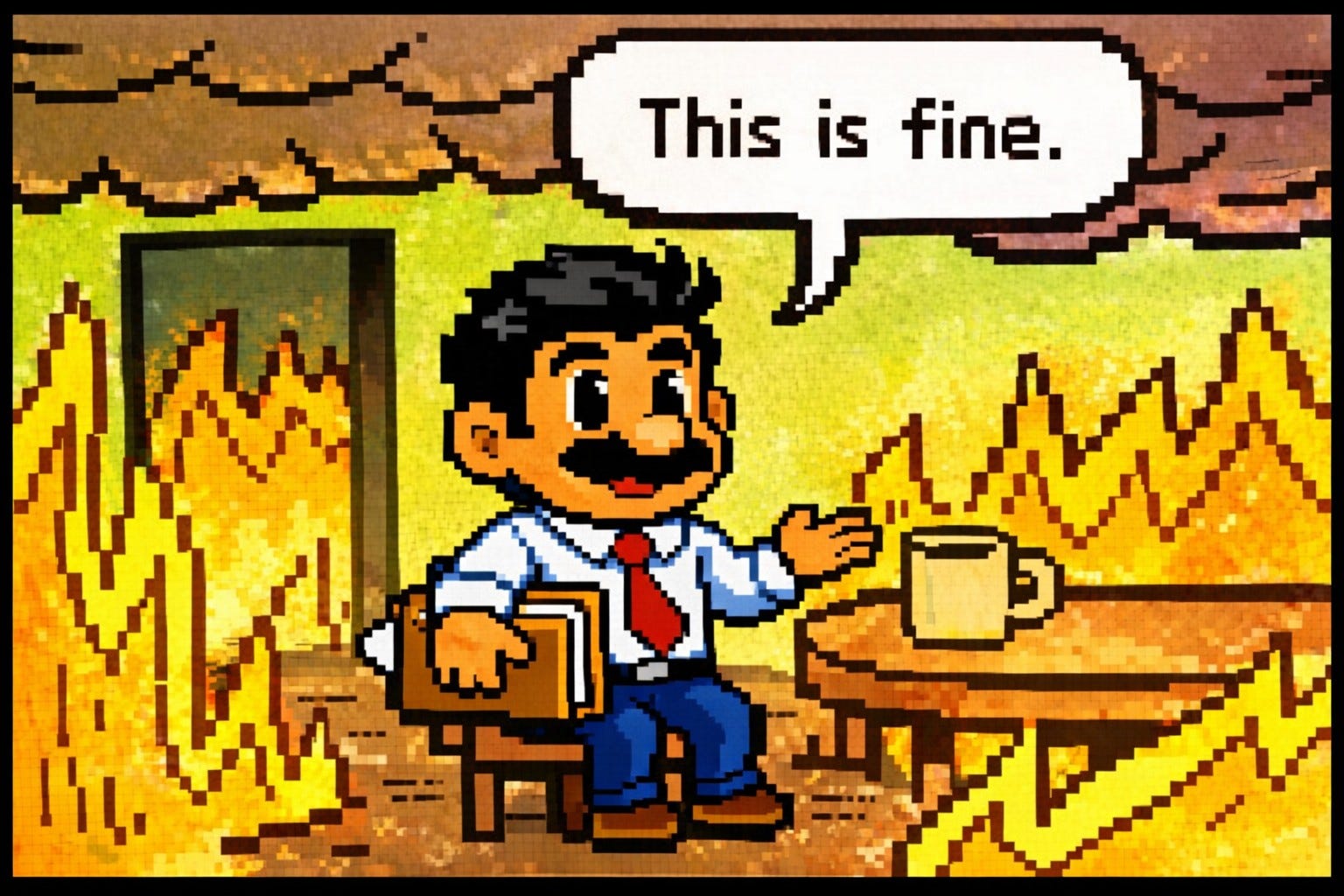
Slowing down was never really the goal.
Orientation was.
What I was missing wasn’t composure. It was a way to decide what mattered first.
Over time, I realized that the difference between reacting and responding came down to a few concrete skills. Skills that helped me move from protecting myself to moving the work forward.
1. Orient to reality before orienting to yourself
This meant learning to put context before identity.
Before asking, What does this mean about me?
I learned to ask:
What actually happened?
Who or what does this affect?
What information is missing right now?
That shift alone kept my imagination from outrunning reality.
2. Separate urgency from importance
Not everything that feels urgent is important. And not everything important feels urgent.
Strategic thinking starts by asking:
Is this a perception issue or a system issue?
Is this reversible, or does it compound over time?
What happens if we don’t act immediately?
This replaced panic with prioritization.
3. Shift from explanation to responsibility
Reaction wants to explain. Strategy wants to prevent recurrence.
Instead of jumping to why this happened, I learned to focus on:
What needs to change so this doesn’t happen again?
Where should safeguards exist?
What does “good” look like next time?
That reframing moved conversations forward instead of inward.
4. Choose the level you’re operating at
Not every problem is a task. Some are process problems. Some are system problems.
Strategic work meant learning to ask:
Is this something I fix directly?
Something I design around?
Or something I escalate so the system can change?
That framing changed where I put my effort.
5. Respond in a way that moves the system, not your standing
Reaction protects reputation. Strategy protects outcomes.
That didn’t mean ignoring accountability.
It meant not letting ego decide the order of operations.
What I used to call “slowing down” was really re-sequencing.
Understanding the terrain before choosing a move.
That’s not softness.
That’s strategy.
That pause, even a short one, changed how I showed up. It helped me notice when my imagination was filling in gaps. It helped me listen instead of defend. It’s still a practice for me, but I’m much more aware of when it’s happening now, especially in unfamiliar situations where emotions tend to take over.
From Tasks to Strategy
These realizations forced me to rethink my role.
I was used to task-oriented work: clear inputs, clear outputs. Project-oriented work was different. The value wasn’t just execution. It was context. Understanding systems well enough to help others make decisions.
As I started writing things down and explaining how pieces fit together, something clicked. People weren’t leaning on me just for answers. They were leaning on me for clarity. And maybe they were asking for that all along.
Influence didn’t come from doing everything myself.
It came from reducing friction and helping the team move.
That shift only happened once I stopped reacting and gave myself permission to process first.
As I started writing things down and explaining how pieces fit together, something clicked. People weren’t leaning on me just for answers. They were leaning on me for clarity. And maybe they were asking for that all along.
Culture Makes This Easier or Impossible
Healthy cultures don’t punish surfacing problems, issues, or outright blockers. They make space for them. They understand that knowing what’s going wrong isn’t a threat. It’s an opportunity to improve systems and reduce risk.
When people don’t feel safe raising issues, problems don’t disappear. They go underground. And that’s when costs compound.
Good cultures reward clarity over cover-ups. Curiosity over blame. They value thoughtful responses more than fast ones.
That kind of environment doesn’t just feel better.
It produces better work.
The Reframe
What once protected my standing eventually limited my impact.
I used to confuse speed with effectiveness. In environments where perception mattered more than value, moving fast felt safe. But strategy requires calculated direction.
Speed still matters. But speed without clarity just compounds noise. Strategic speed comes from understanding the problem, the system, and the risk. And that takes time.
The environments I grew up in trained me to treat every moment as high stakes. To assume hesitation was weakness. What I had to unlearn was the idea that urgency and intention are the same thing.
The real work, in relationships, teams, and systems, isn’t about being the quickest to respond.
It’s about being grounded enough to respond well.
That’s where leverage lives.
Not in reputation.
Not in raw speed.
But in the ability to pause just long enough to choose the right move, then commit to it fully.
Originally published on Substack.
I write about how systems influence behavior, often in subtle ways. Not to explain everything, but to slow things down enough to see what’s usually missed. The aim is to help build better mental models. If this resonated, you can support my writing with a coffee.